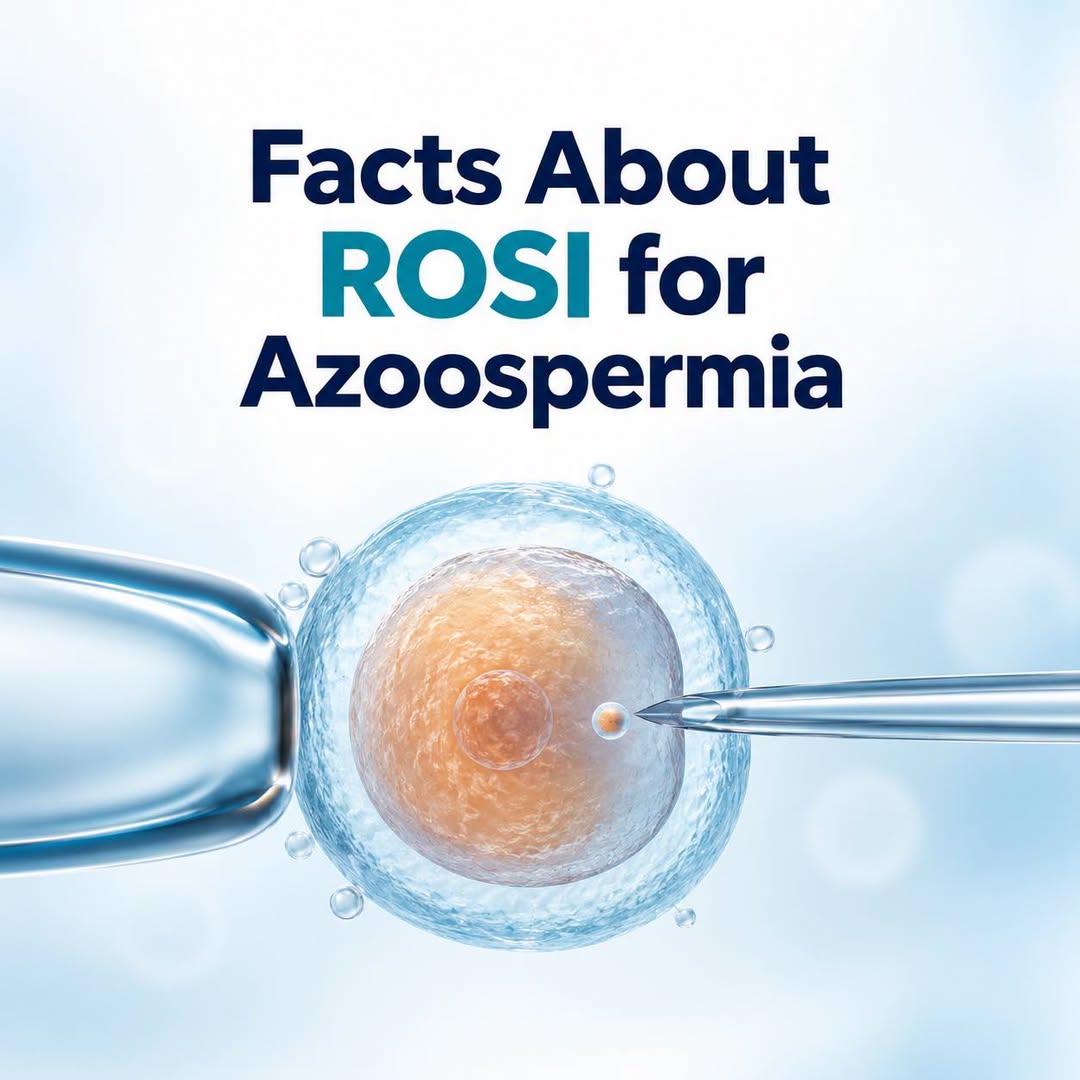
ROSI, Round Spermatid Injection is used when no mature sperm can be found and an immature round spermatid is injected directly into the egg.
During ICSI, piercing the egg with a needle or using electrical or chemical stimulation may sometimes activate the egg and cause it to begin dividing. However, cell division alone does not confirm normal fertilization and does not mean that a healthy embryo has been created. Even an egg without any male reproductive cell can sometimes divide through parthenogenetic activation, but such development is not equivalent to normal fertilization and cannot normally result in a healthy live birth.
It is also incorrect to say that injecting “any round cell” can achieve fertilization. A true round spermatid contains a haploid paternal genome, while many other round cells found in testicular tissue are somatic cells, immune cells, or earlier germ cells. Correctly identifying a round spermatid is difficult and represents one of the major limitations of ROSI.
Round spermatids also lack the natural egg-activating capacity of mature sperm. Therefore, ROSI usually requires additional artificial oocyte activation. Published research confirms that healthy children have been born after ROSI, so the technique should not be described as impossible. Nevertheless, its overall efficiency remains very low. A systematic review reported approximately 38.7% fertilization but only 3.7% pregnancy.
More developed cells such as elongating or elongated spermatids are closer to mature sperm and have generally produced better results than round spermatids.
Therefore, ROSI may represent a final experimental option for carefully selected patients, but it should not be presented as an established treatment or as an alternative with a high success rate. Finding mature sperm remains the preferred and biologically strongest option whenever possible.