
Prolistem Clinical Study
For men diagnosed with oligospermia, Prolistem® for Oligospermia provides a structured, patented, all-natural program (FDA Certificate of Free Sale, U.S.) specifically designed to support sperm count and overall semen parameters.
Clinical Study Published 2023
A Clinical Trial Evaluating the Efficacy of Prolistem® Supplement in Men with Non-Obstructive Azoospermia (Primary Testicular Failure
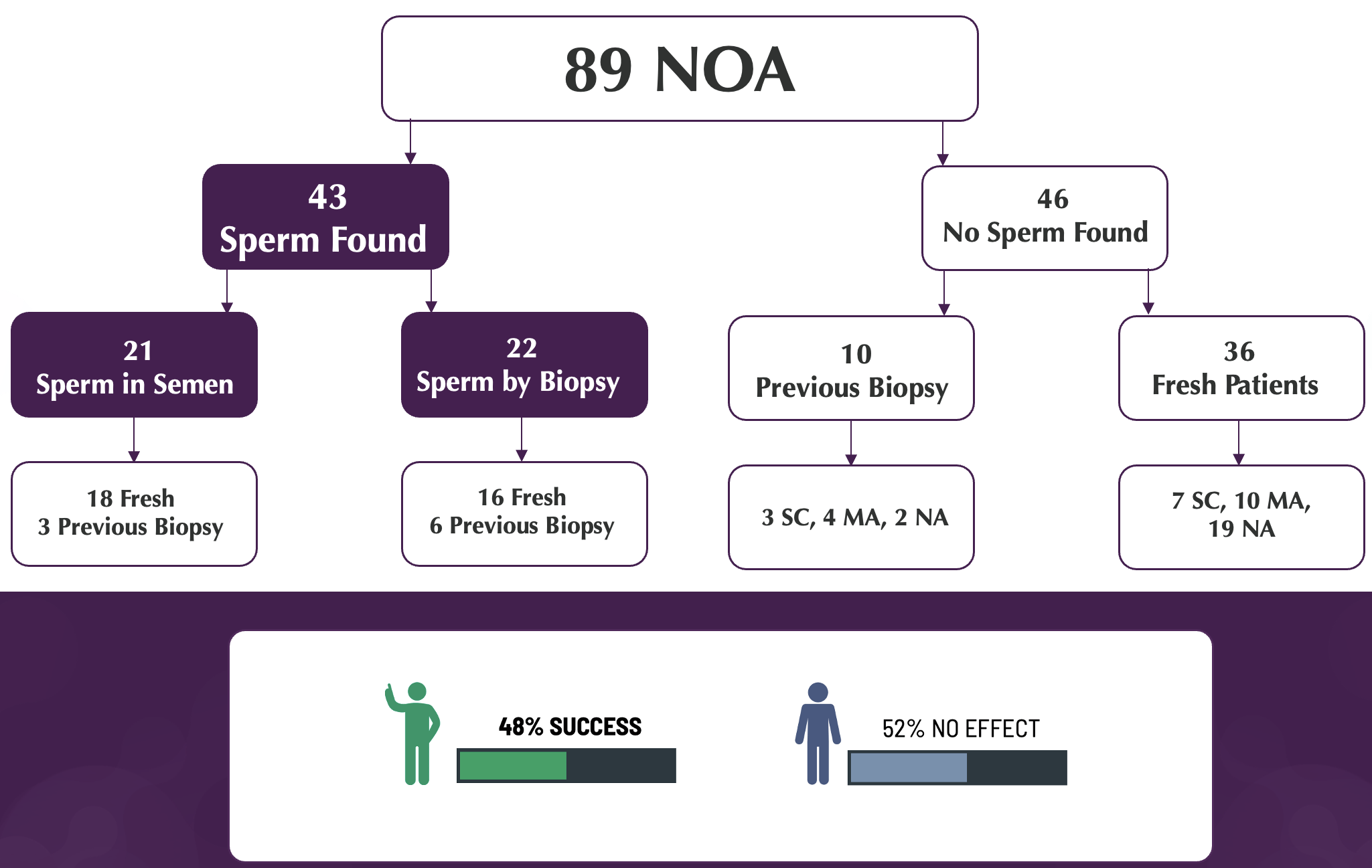
Patients who had undergone six months of Prolistem® treatment were subjected to semen analysis, and if no sperm were found, we recommended TESE or micro-TESE procedures. In 48% of the cases following the treatment, either through semen analysis or sperm retrieval, sperm was successfully found. Among the patients, 23% found sperm in their semen (Table 1), ranging from a few to a few million, while 25% underwent successful TESE or micro-TESE surgery to retrieve sperm (Table 2). However, for 52% of patients who received our treatment for six months, there was no observed effect, which may be attributed to unknown genetic factors.
Conclusion
The present study investigated the efficacy of Prolistem® treatment in an animal model of azoospermia and in a clinical trial involving 89 patients with non-obstructive azoospermia. The animal model demonstrated a 100% positive response to the treatment, which is consistent with our previous studies. However, the clinical trial showed a success rate of 48%, possibly due to unknown genetic factors.
Previous research has shown that testosterone has an inhibitory effect on spermatogonial differentiation in azoospermia cases. Additionally, suppression of testosterone with GnRH antagonist has been shown to stimulate spermatogonial differentiation, which is then reversed by exogenous testosterone. In contrast, testosterone plays a supportive role in normal spermatogenesis by promoting the survival and differentiation of spermatocytes and spermatids.
Chemical drugs that lower testosterone levels would be ideal for treating azoospermia, but their use may be associated with major side effects. Thus, physicians are cautious about testosterone supplementation in low testosterone cases, instead recommending natural ways to increase testosterone levels. In this regard, Prolistem®, which reduces testosterone levels naturally with no side effects, presents a promising treatment option for non-obstructive azoospermia.
Until recently, non-obstructive azoospermia was considered an untreatable condition. However, our study provides evidence that Prolistem® has the potential to restore fertility in affected individuals by reducing testosterone levels naturally.
Table 1: shows the details of 21 patients who successfully found sperm in their semen after completing the six-month course of Prolistem® treatment. To protect their privacy, these patients were given special IDs. The table includes their age, country and previous treatments, Hormone levels were measured before and after the treatment, and the results are presented in the table below.
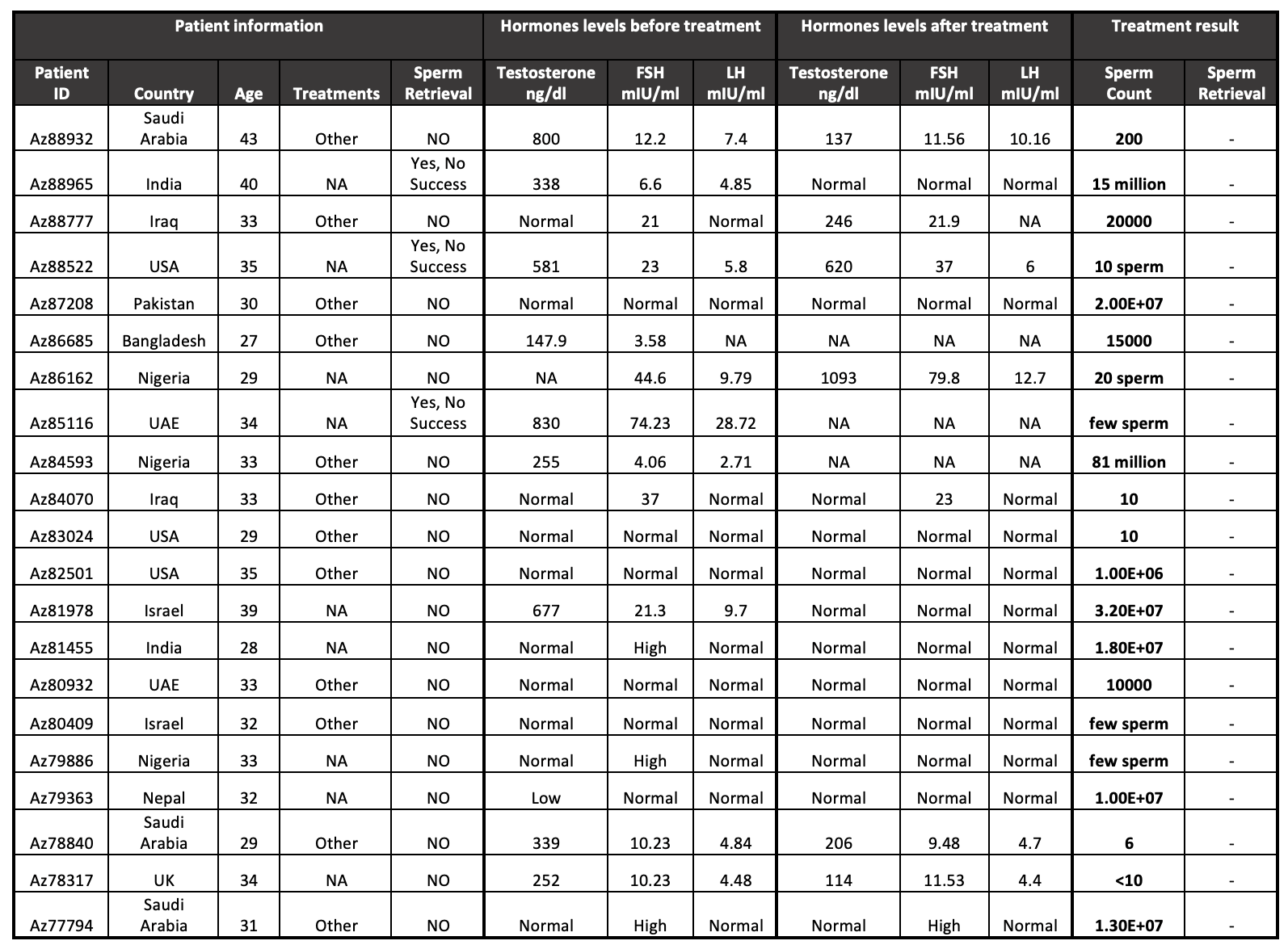
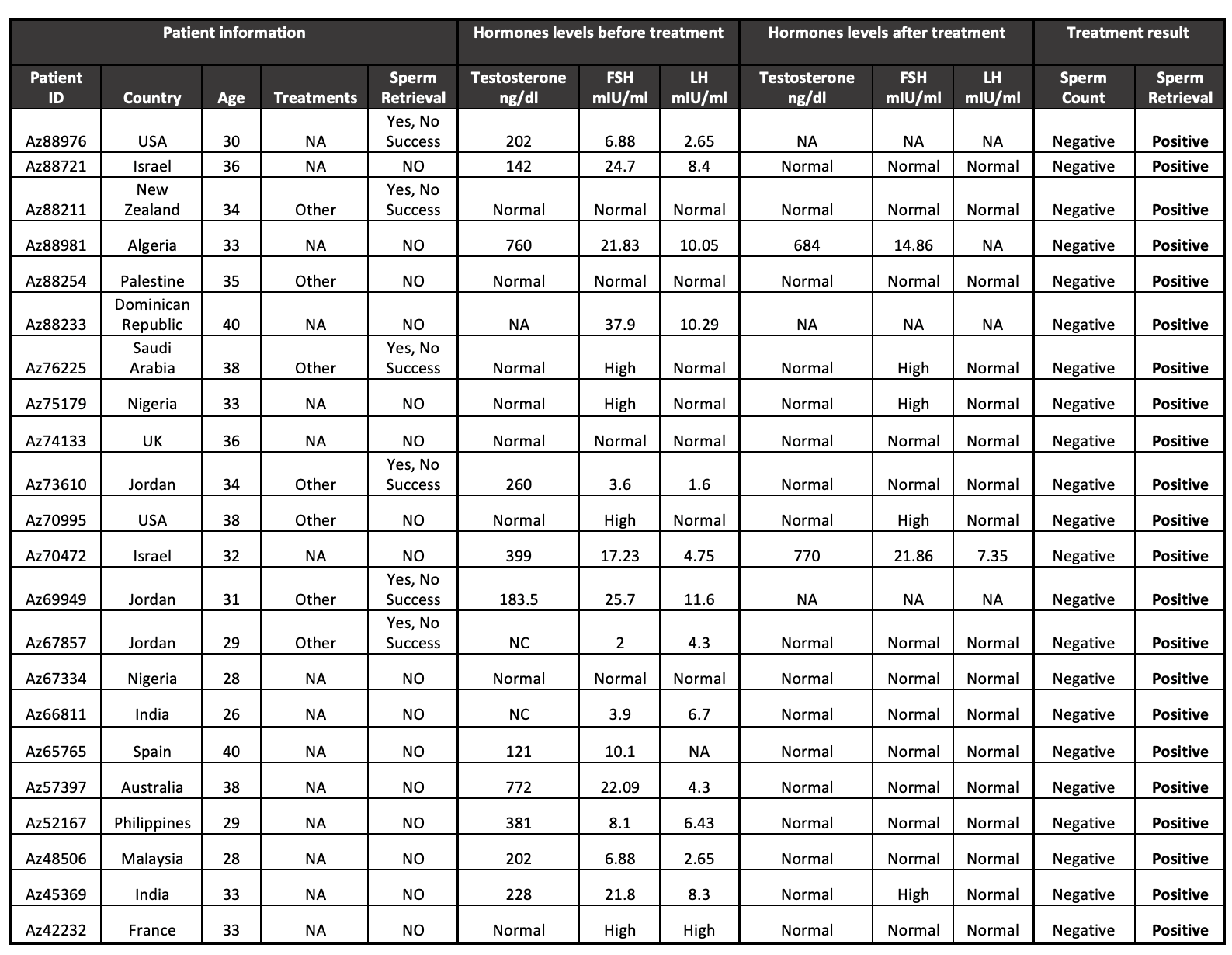
Table 2: shows the details of 22 patients who successfully found sperm by sperm retrieval after completing the six-month course of Prolistem® treatment. The table includes their age, country and previous treatments, Hormone levels were measured before and after the treatment, and the results are presented in the table below.
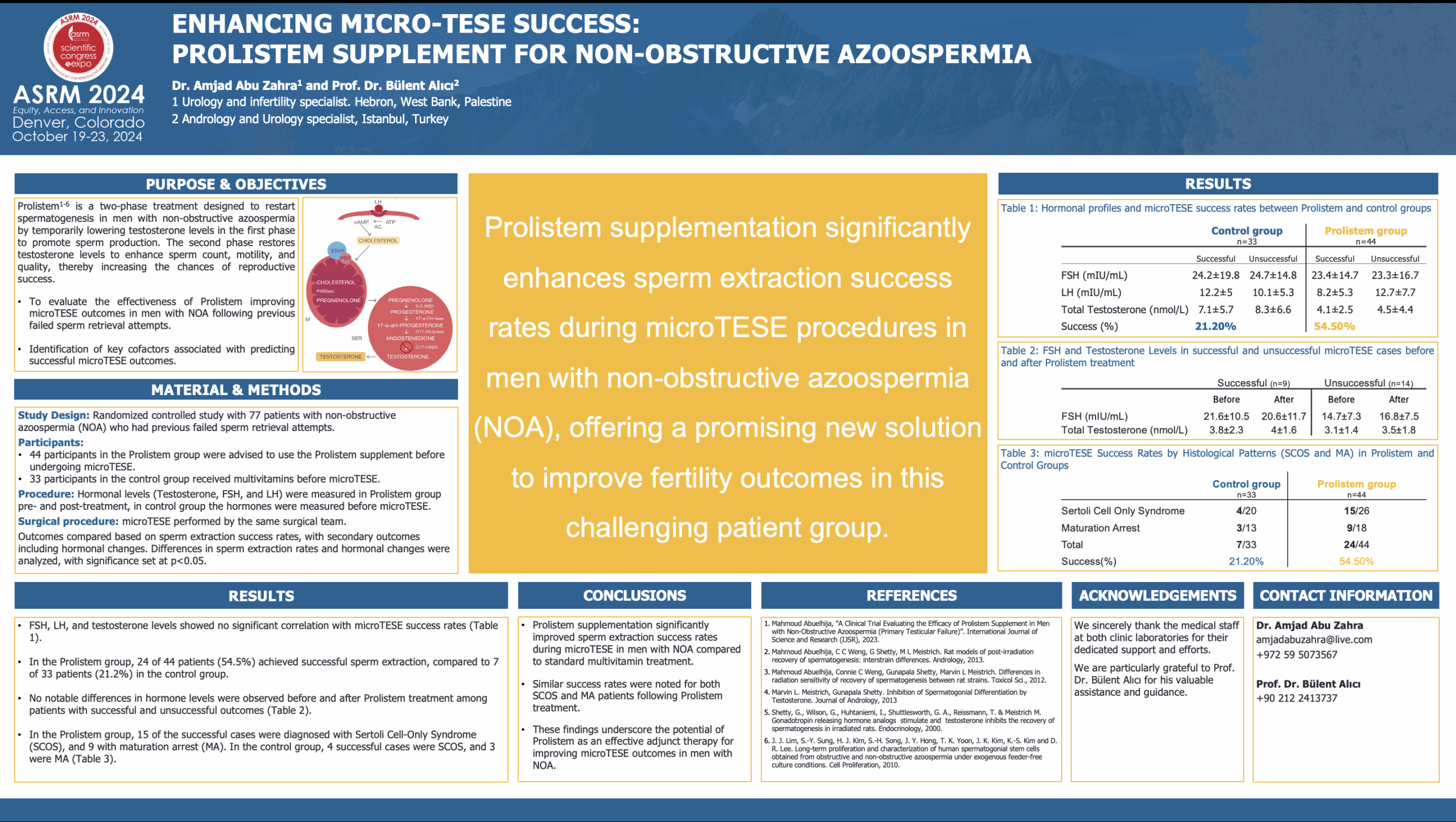
A clinical study published in 2024 at the ASRM (American Society for Reproductive Medicine
ENHANCING MICROTESE SUCCESS: PROLISTEM SUPPLEMENT FOR NON-OBSTRUCTIVE AZOOSPERMIA
OBJECTIVE
To evaluate the efficacy of Prolistem, a novel supplement, in enhancing MicroTESE success rates for men with non-obstructive azoospermia (NOA).
MATERIALS AND METHODS
A randomized study was conducted on 40 NOA patients, divided into two groups: Prolistem (n=20) and control (n=20). The Prolistem® group received the supplement for six months before undergoing MicroTESE, while the control group received random multivitamins. Success rates of sperm extraction during MicroTESE were compared between the groups.
RESULTS
In the Prolistem group, 12 out of 20 patients (60%) successfully had sperm extracted during MicroTESE. In contrast, only 4 out of 20 patients (20%) in the control group achieved successful sperm extraction.
CONCLUSIONS
Prolistem supplementation significantly increased the success rate of sperm extraction during MicroTESE for men with NOA compared to standard multivitamins. These findings highlight the potential of Prolistem as a therapeutic intervention for improving fertility outcomes in NOA patients.
IMPACT STATEMENT
The use of Prolistem offers a promising avenue for addressing male infertility associated with NOA, potentially revolutionizing treatment approaches and offering hope to individuals struggling with this condition. Further research and clinical trials are warranted to validate these findings and explore the broader implications of Prolistem supplementation in male infertility management.
Clinical Study Presented at ESHRE 2026 Demonstrates Encouraging Outcomes with Prolistem in Men with Repeated Failed microTESE
Click here for the post: https://academic.oup.com/humrep/article/41/Supplement_1/deag083.361/8727817
(NOA) who had previously undergone two unsuccessful microTESE procedures.
- 10.3% (3/29) of patients had sperm detected in their ejaculate following treatment.
- Among the remaining patients, 13 underwent a third microTESE, and 23.1% (3/13) achieved successful surgical sperm retrieval.
- Overall, sperm became available for assisted reproduction in 6 patients, resulting in three ongoing pregnancies.
- No treatment-related adverse events were reported during the study.
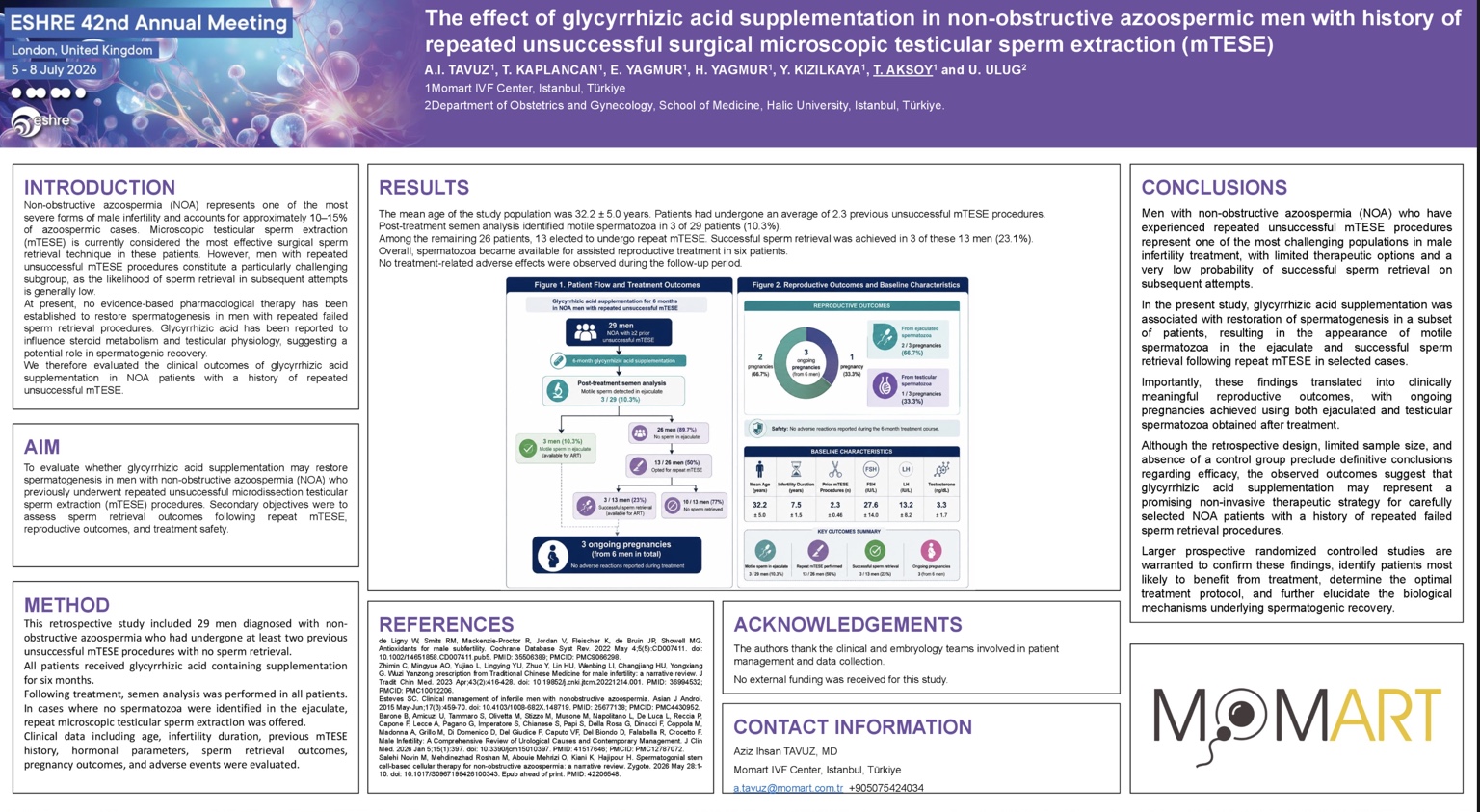
Although the study was retrospective and larger prospective randomized trials are needed, the results presented at ESHRE 2026 add to the growing clinical experience supporting Prolistem as a non-invasive therapeutic approach for men facing repeated unsuccessful sperm retrieval procedures.
We congratulate the clinical team at Momart IVF Center on presenting these important findings and thank all colleagues who attended the presentation and contributed to the scientific discussions on advancing treatment options for male infertility.