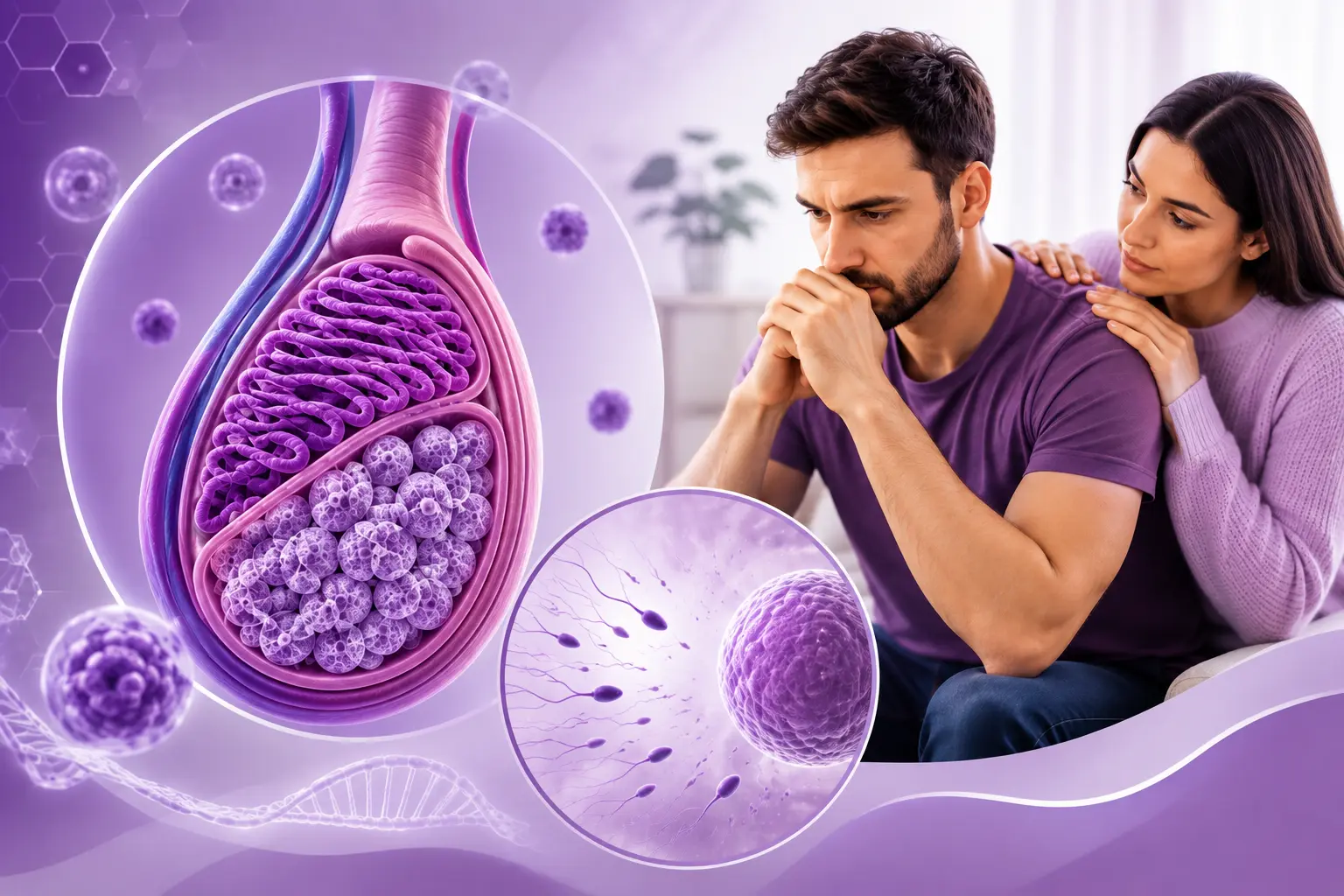
Think of the testis as the factory responsible for producing sperm.
In non-obstructive azoospermia caused by primary testicular failure, there is no blockage. The factory itself is struggling to produce sperm. However, finding no sperm in the semen does not always mean that absolutely no sperm exist inside the testes. Small, isolated areas may still be producing a few sperm.
In many men, the exact cause remains unknown even after a proper medical evaluation. Necessary investigations should be completed, but valuable time should not be lost repeatedly trying supplements or treatments that are not supported for this specific diagnosis.
For men who wish to use their own sperm for ICSI, major international guidelines recommend surgical sperm retrieval. MicroTESE is generally considered the preferred procedure for men with non-obstructive azoospermia.
Hormonal treatment requires careful distinction. It can be effective when azoospermia results from a true hormonal deficiency. However, in primary testicular failure, evidence that hormones such as hCG improve sperm-retrieval outcomes is limited and inconclusive. Routine hormonal stimulation before microTESE is therefore not generally recommended.
At Prolistem, our goal is to improve the opportunity before surgery.
Prolistem is a six-month program designed to support the testicular environment and give the remaining sperm-producing cells an opportunity to continue the spermatogenesis cycle. In some men, a small number of sperm may appear in the semen and potentially be collected for ICSI. If sperm are not found after the program, microTESE remains the next recommended step.
Prolistem cannot guarantee sperm production or successful retrieval. What we can promise is an honest and transparent conversation about your diagnosis, realistic chances, and available options.
Talk to us before deciding on your next step.