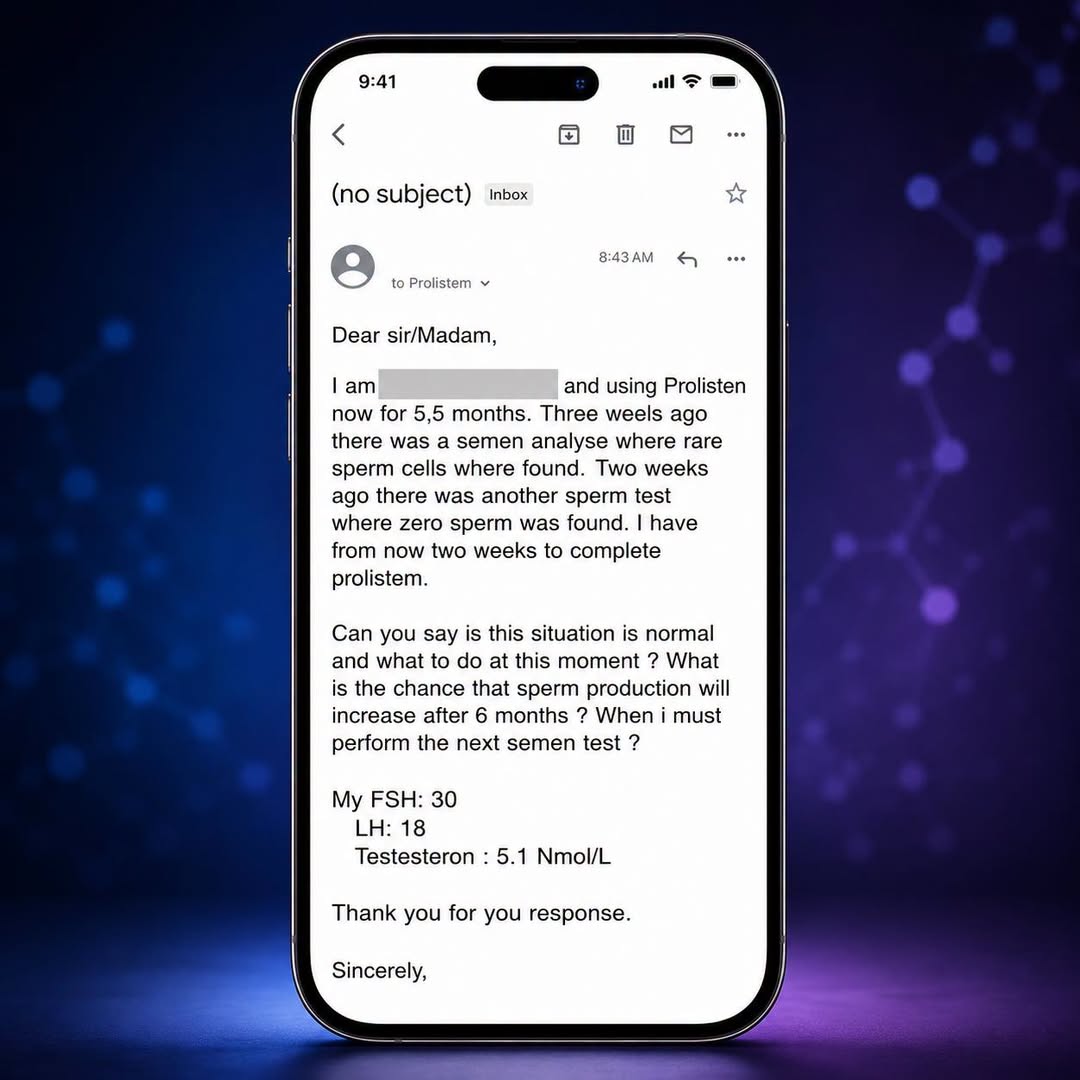
A man with non-obstructive azoospermia and a high FSH level of 30 had rare sperm detected in his semen after five and a half months of Prolistem. However, a second semen analysis performed two weeks later showed no sperm.
In non-obstructive azoospermia, sperm production may be extremely limited and occur only in small areas of the testes. Therefore, rare sperm may appear in one semen sample but not in the next. A negative result after a positive result does not necessarily mean that sperm production has stopped.
Three important points every patient should remember:
1. Arrange sperm freezing before the semen analysis
Before providing the sample, confirm that the laboratory can search the centrifuged sample carefully and immediately freeze any viable sperm found. Not every laboratory can do this without prior arrangements.
When sperm production is extremely limited, the opportunity to detect sperm in the semen may be temporary. Repeated semen analyses should be performed according to a planned schedule, particularly during the later months of treatment and after completing it.
Genetic factors and severe testicular dysfunction may contribute to very limited or inconsistent sperm production. A high FSH level indicates significant testicular impairment, but FSH alone cannot determine whether rare sperm may still be found.
If an opportunity to freeze sperm is missed, the patient should discuss the next step with his fertility specialist. In selected cases, repeating the Prolistem program may be considered, but this decision must be individualized and cannot guarantee that sperm will reappear.
In azoospermia, every sperm counts. When sperm are found, do not miss the opportunity to preserve them