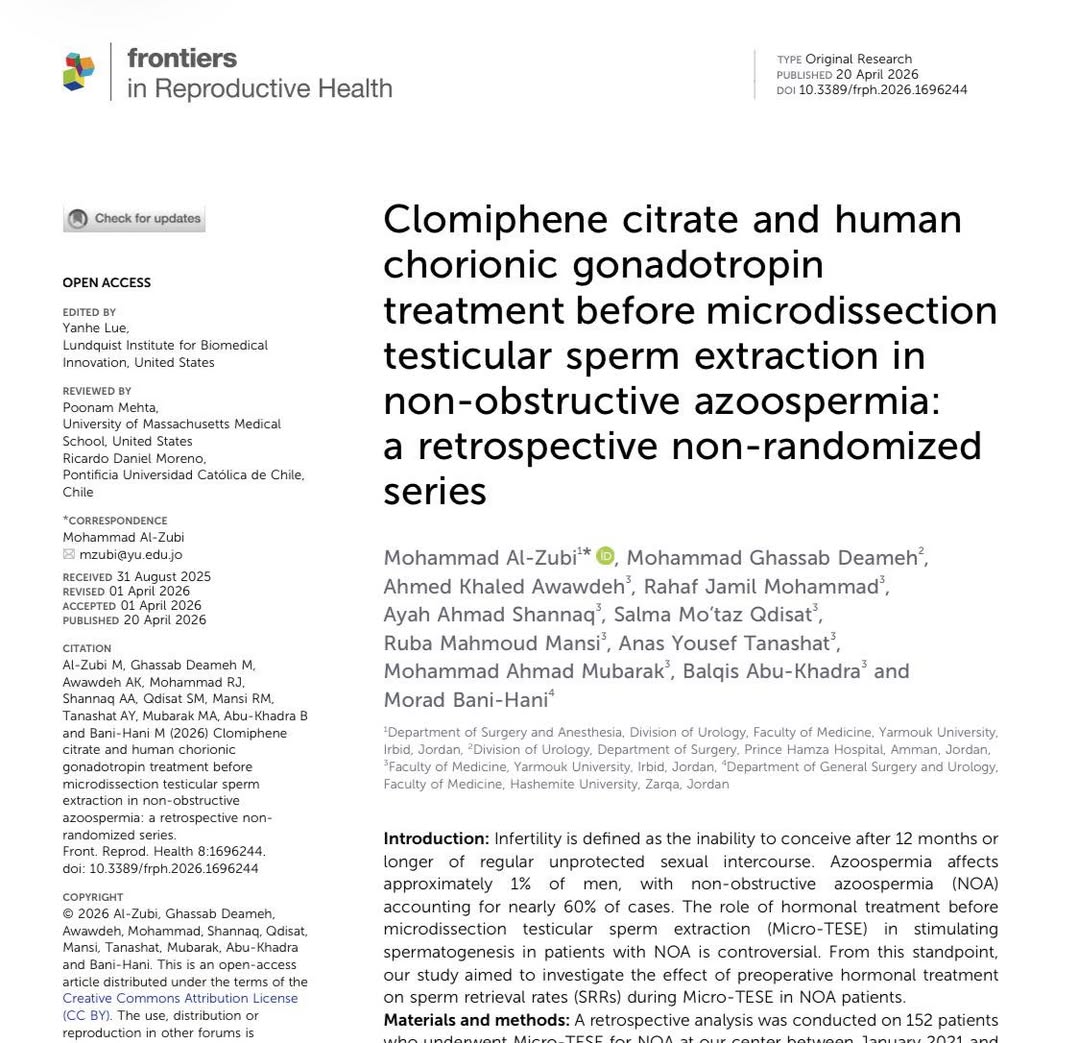
A new retrospective study weighs in on a highly debated topic in male infertility: the use of empirical hormonal optimization before surgery.
The study evaluated 152 men with non-obstructive azoospermia (NOA) to determine if a 3-month preoperative regimen of clomiphene citrate and hCG improves surgical outcomes.
The short answer? It did not.
The Key Findings
The sperm retrieval rate (SRR) was 50% for patients who went straight to surgery without hormonal treatment, compared to 45% for those who received the therapy. The difference was not statistically significant.
While the therapy successfully lowered median follicle-stimulating hormone (FSH) levels, it did not significantly alter luteinizing hormone (LH) or total testosterone levels by the time of surgery.
Regardless of hormone therapy, multivariable analysis showed that younger age and higher total testosterone were the actual independent predictors of successful sperm retrieval.
The Big Takeaway
This research aligns closely with current European Association of Urology (EAU) guidelines. It suggests that routine, empirical hormonal optimization before Micro-TESE may not provide the clinical edge many hope for.
Instead, future efforts should focus on better patient stratification to identify the specific subgroups who might truly benefit from targeted stimulation.